

Recovery does not end with time. For many people, it continues across decades—and into older adulthood. Today, a growing number of individuals are aging in recovery, living with chronic illness, reduced mobility, and increased isolation. Yet this population remains largely unseen in both aging services and recovery systems.
During the COVID pandemic, something unexpected happened. As recovery meetings moved online, individuals who had long been absent began reappearing—people who were homebound, medically fragile, or aging. Many shared that they had stopped attending meetings not because recovery was no longer important, but because illness, mobility challenges, or fear of exposure had made in-person meeting attendance impossible.
This revealed a hidden truth: many people aging in recovery were already isolated long before the pandemic.
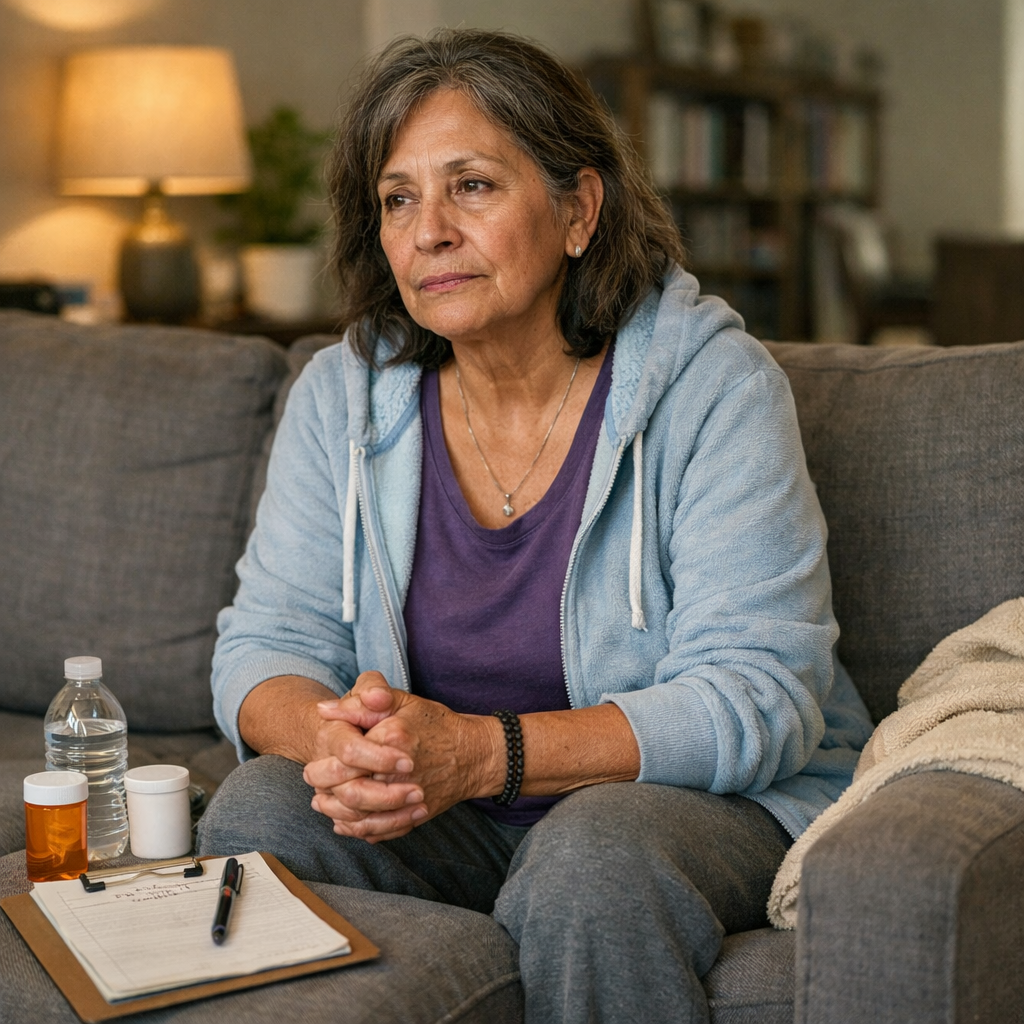
Advances in substance use treatment, peer recovery support, and long-term recovery pathways have resulted in a growing population of individuals who have sustained recovery for decades. Many of these individuals are now entering older adulthood. In New York State, where both the aging population and the number of individuals in long-term recovery are substantial, the intersection of aging and recovery presents challenges that existing systems are not fully equipped to address (New York State Office of Addiction Services and Supports [OASAS], 2021).
Historically, aging services and substance use treatment systems have developed in parallel, rarely intersecting in policy or practice. As a result, older adults in recovery often fall through systemic gaps—particularly during periods of illness, functional decline, or transitions from institutional care back to the community.
A Pandemic-Era Observation: Revealing a Hidden Population
During the early months of the COVID-19 pandemic, in-person recovery meetings across New York City and beyond abruptly ceased. In response, virtual recovery meetings rapidly emerged. While the shift was initially framed as a temporary accommodation, it produced an unexpected and profound insight.
As virtual meetings became accessible, individuals who had long been absent from in-person recovery spaces began reappearing. These included homebound individuals, those with serious medical conditions, and many older adults in long-term recovery who had been unable to attend physical meetings due to illness, mobility limitations, or frailty. Their re-engagement illuminated two critical realities: first, that illness and aging had quietly pushed many people out of recovery spaces; and second, that a significant and growing population of older adults in recovery had remained largely invisible to service providers.
This observation underscored the extent to which physical accessibility—not disengagement from recovery—had been the primary barrier for many aging individuals.
Aging, Illness, and Relapse Risk
Aging in recovery involves more than maintaining abstinence; it requires ongoing attention to physical health, emotional regulation, and social connection. Older adults with a history of substance use disorders experience disproportionately high rates of chronic illness, disability, and co-occurring mental health conditions (SAMHSA, 2020). Functional decline and increased dependency can undermine autonomy and exacerbate feelings of shame, fear, and isolation—factors strongly associated with relapse vulnerability (Kelly & White, 2011).
In later life, relapse carries heightened medical consequences. Age-related physiological changes, the prevalence of chronic disease, and polypharmacy substantially increase the risk of overdose and mortality following relapse (Centers for Disease Control and Prevention [CDC], 2022). For aging individuals in recovery, relapse is often not survivable.
Caregiver Burnout and Household Instability
Family members—often spouses or partners who are themselves aging—frequently assume caregiving roles without adequate training or support. Research has consistently linked caregiver burden to increased stress, depression, and substance use relapse among caregivers (Riffin et al., 2017). In recovery-affected households, caregiver burnout can destabilize both the caregiver and the individual receiving care.
In New York State, the absence of recovery-aware home support contributes to avoidable institutionalization, prolonged hospital stays, and unnecessary nursing home placement—despite many individuals being medically stable enough to remain at home with appropriate non-medical support.
Gaps in Existing Service Models
Although home care services are widely available, few are designed with recovery awareness as a foundational principle. Traditional home care models focus primarily on physical tasks, often overlooking the psychosocial dimensions of recovery. Conversely, recovery-oriented services frequently lack the infrastructure to support aging and medically complex individuals.
This gap is most evident during transitions from hospitals, rehabilitation facilities, or nursing homes back to the community—periods marked by heightened vulnerability and relapse risk.

Recovery does not end with time. For many people, it continues across decades—and into older adulthood. Today, a growing number of individuals in long-term recovery are aging, living with chronic illness, reduced mobility, and increased isolation…
The Risks of Aging Without Recovery-Aware Support
As people age, medical needs often increase. Chronic pain, sleep disorders, and anxiety are common—and frequently treated with prescribed medications. For individuals with a history of substance or alcohol use, these medications can pose serious risks without appropriate recovery-aware support.
In New York State, an estimated 2.5 million residents are living in recovery from substance use disorders¹. Adults aged 55 and older represent one of the fastest-growing segments of this population. At the same time, overdose deaths among older adults in New York City have continued to rise, often involving prescribed opioids, benzodiazepines, or sedatives in combination with other substances².
For those in recovery, relapse—particularly later in life—is often medically dangerous and, in many cases, fatal.
When Caregivers Are Overwhelmed
Many aging individuals rely on spouses, partners, or family members for care. Often, these caregivers are aging themselves. Without adequate support, caregiver burnout can destabilize entire households.
Research has consistently shown that caregiver stress is associated with increased health risks, depression, and substance use relapse³. In recovery-impacted families, this stress can undermine both the caregiver’s stability and the recovery of the person receiving care.
Too often, the absence of recovery-aware home support leads to avoidable crises, hospitalizations, or premature institutional placement.
Implications for Social Work Practice
Social workers are uniquely positioned to identify and respond to emerging populations at risk. Addressing the needs of aging individuals in recovery aligns with core social work values, including person-in-environment practice, harm reduction, self-determination, and social justice. Recovery-aware home support represents a critical extension of ethical social work practice in aging and health contexts.
Conclusion
The emergence of an aging population in long-term recovery is a testament to the success of decades of recovery efforts. It also presents a clear mandate: to develop systems that recognize and support recovery across the lifespan. Aging in recovery is not a marginal issue—it is an inevitable outcome of progress. Addressing it now is both a professional and ethical imperative.
References
- New York State Office of Addiction Services and Supports (OASAS).
Estimated number of New Yorkers in recovery.
https://oasas.ny.gov
- New York City Department of Health and Mental Hygiene (DOHMH).
Overdose deaths in New York City.https://www.nyc.gov/site/doh - Riffin, C., Van Ness, P. H., Wolff, J. L., & Fried, T. (2017).
Family and other unpaid caregivers and older adults with and without dementia and disability.
Journal of the American Geriatrics Society, 65(8), 1821–1828.https://doi.org/10.1111/jgs.14910 - Centers for Disease Control and Prevention. (2022). Drug overdose deaths in the United States, 2001–2021. CDC.
- Kelly, J. F., & White, W. L. (2011). Addiction recovery management: Theory, research, and practice. Springer Publishing Company.
- New York State Office of Addiction Services and Supports. (2021). Substance use disorder treatment annual report. https://oasas.ny.gov
- Riffin, C., Van Ness, P. H., Wolff, J. L., & Fried, T. (2017). Family and other unpaid caregivers and older adults with and without dementia and disability. Journal of the American Geriatrics Society, 65(8), 1821–1828. https://doi.org/10.1111/jgs.14910
- Substance Abuse and Mental Health Services Administration. (2020). Treatment for substance use disorder in older adults. U.S. Department of Health and Human Services.