
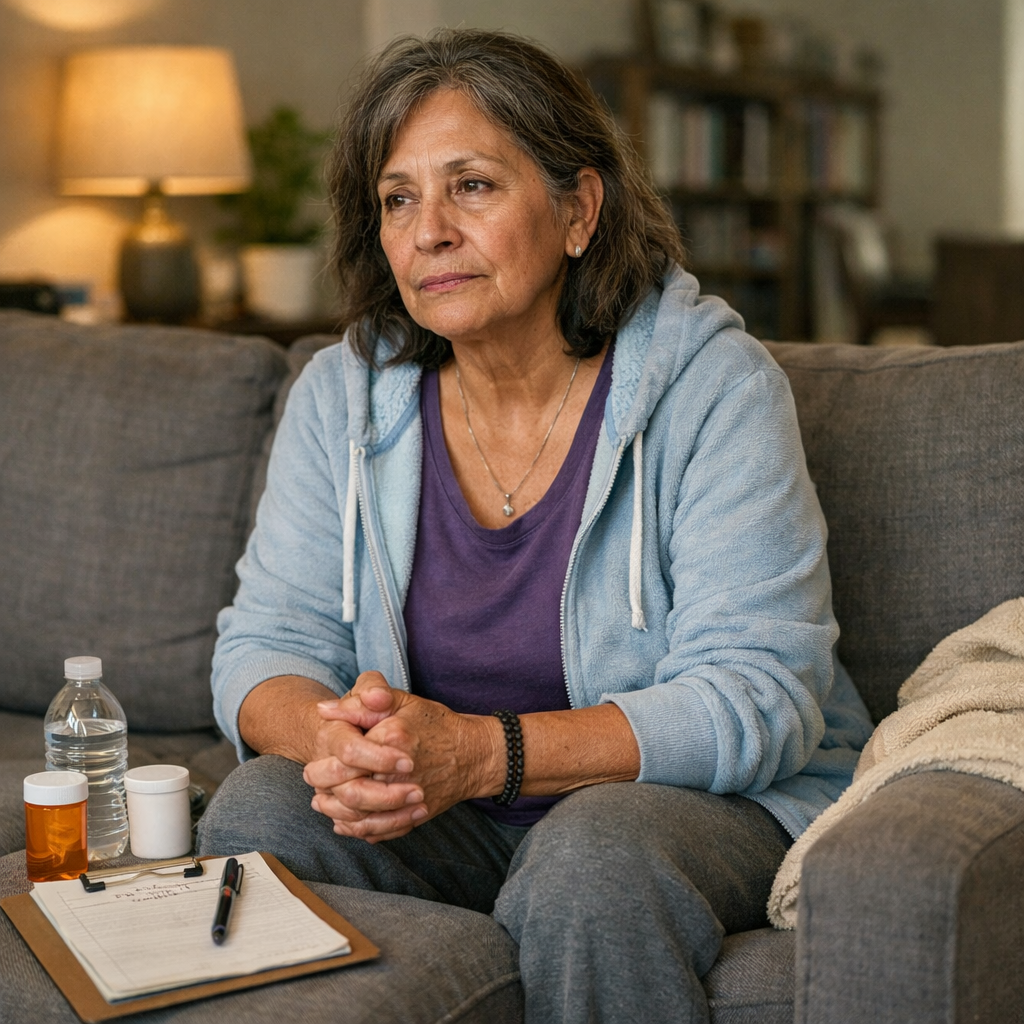
For decades, systems have been designed to respond to crisis.
- Substance use.
- Hospitalization.
- Instability.
When those things happen, systems activate.
Services appear.
Interventions are deployed.
But what happens when recovery works?
What happens when someone lives 20, 30, even 40 years in recovery — and begins to age?
That is where the system becomes uncertain.
The Gap No One Designed For
Older adults in long-term recovery often find themselves in a space that existing systems were never built to address.
They are no longer in active addiction.
They are not in early recovery.
They are not typically engaged in treatment programs
And yet — they are aging.
They face the same realities as any older adult:
Declining health
Increased medical needs
Reduced mobility
Social isolation
But with an additional layer:
Their recovery must be protected.
When Stability Becomes Invisibility
Ironically, long-term recovery can make individuals less visible to systems.
Because they are stable, they are no longer tracked.
Because of anonymity, they are not counted.
Because they are not in crisis, they are not prioritized.
Until something happens.
A fall.
A hospitalization.
A sudden decline.
And then decisions are made quickly — often without understanding the role recovery plays in that person’s life.
Default Systems, Misaligned Outcomes
In many cases, older adults are discharged into environments that are not recovery-informed.
Not because anyone intended harm —
but because:
Time is limited
Options are unclear
Systems are fragmented
Placement becomes the fastest solution.
But not always the right one.
A Different Approach Is Needed
Aging in recovery requires something more intentional.
It requires:
Continuity, not just intervention
Coordination, not fragmentation
Support that understands both aging and recovery
This is not about creating entirely new systems.
It’s about recognizing what already exists — and designing around it.
Introducing Never Alone Home Care Services, Inc. (NAHCS)
Never Alone Home Care Services, Inc. was developed in response to this exact gap.
NAHCS is a recovery-informed support model focused on helping individuals age with dignity, stability, and continuity of care.
The approach is simple:
Meet people where they are
Support independence whenever possible
Integrate recovery awareness into everyday care
Reduce unnecessary institutional placement
This is not clinical treatment.
It is support, coordination, and presence — grounded in an understanding of long-term recovery.
Who This Is For
NAHCS is designed to support:
Individuals aging in recovery who need assistance or guidance
People in recovery interested in becoming caregivers or support staff
Agencies and organizations seeking recovery-informed collaboration
Next Step
If you or someone you know may benefit from this type of support —
or if you’re interested in learning more about how this model works —
For your convenience, you can click here for more information or to get started.